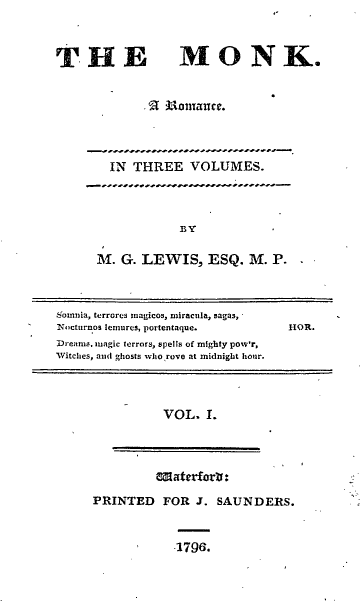
Book
The Monk
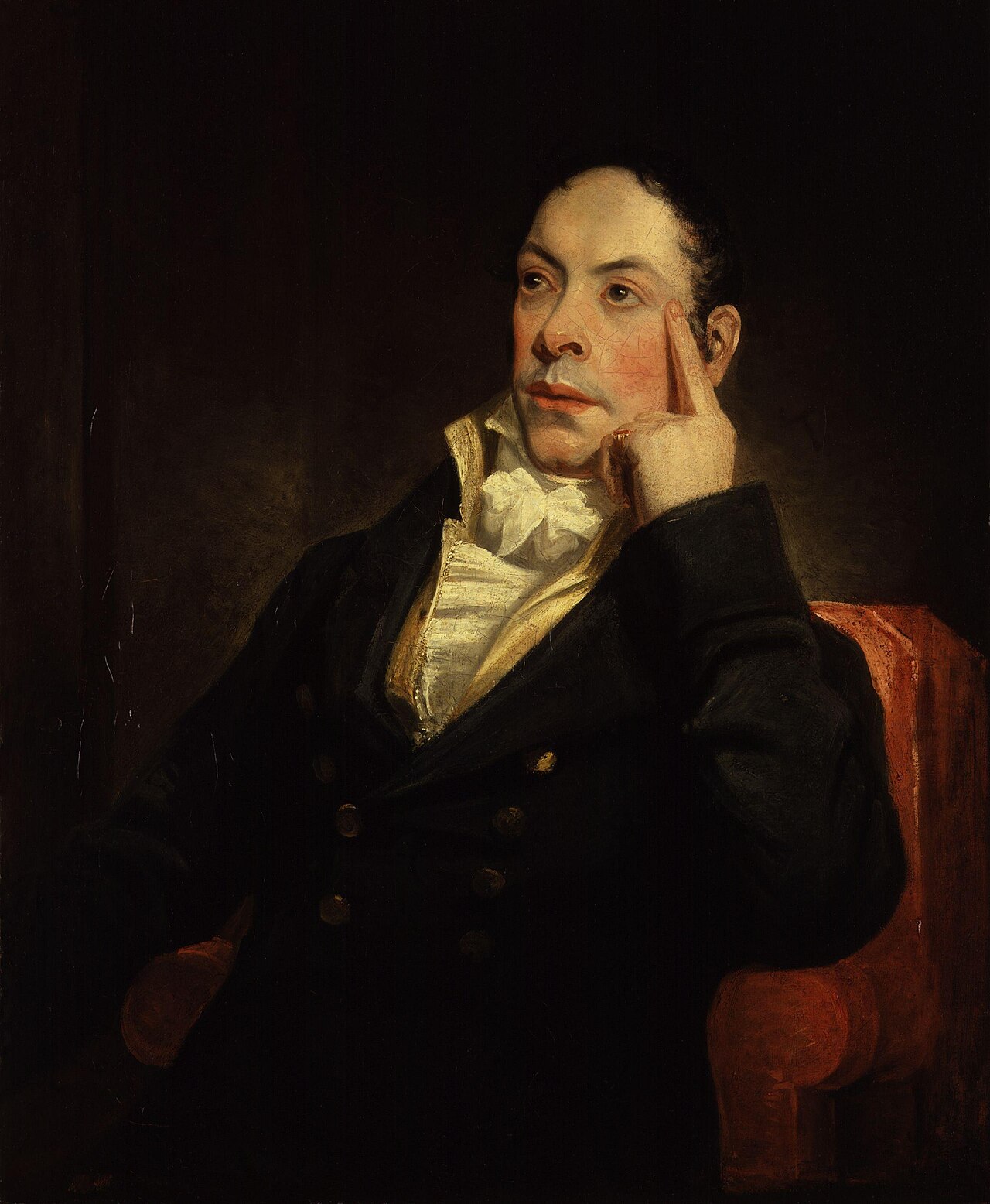 Matthew Gregory Lewis
The Monk: A Romance is a Gothic novel by Matthew Gregory Lewis, published in 1796 across three volumes. Written early in Lewis's career, it was published anonymously when he was 20.
From the book
Quotes from “The Monk”
Continue exploring
You may also like
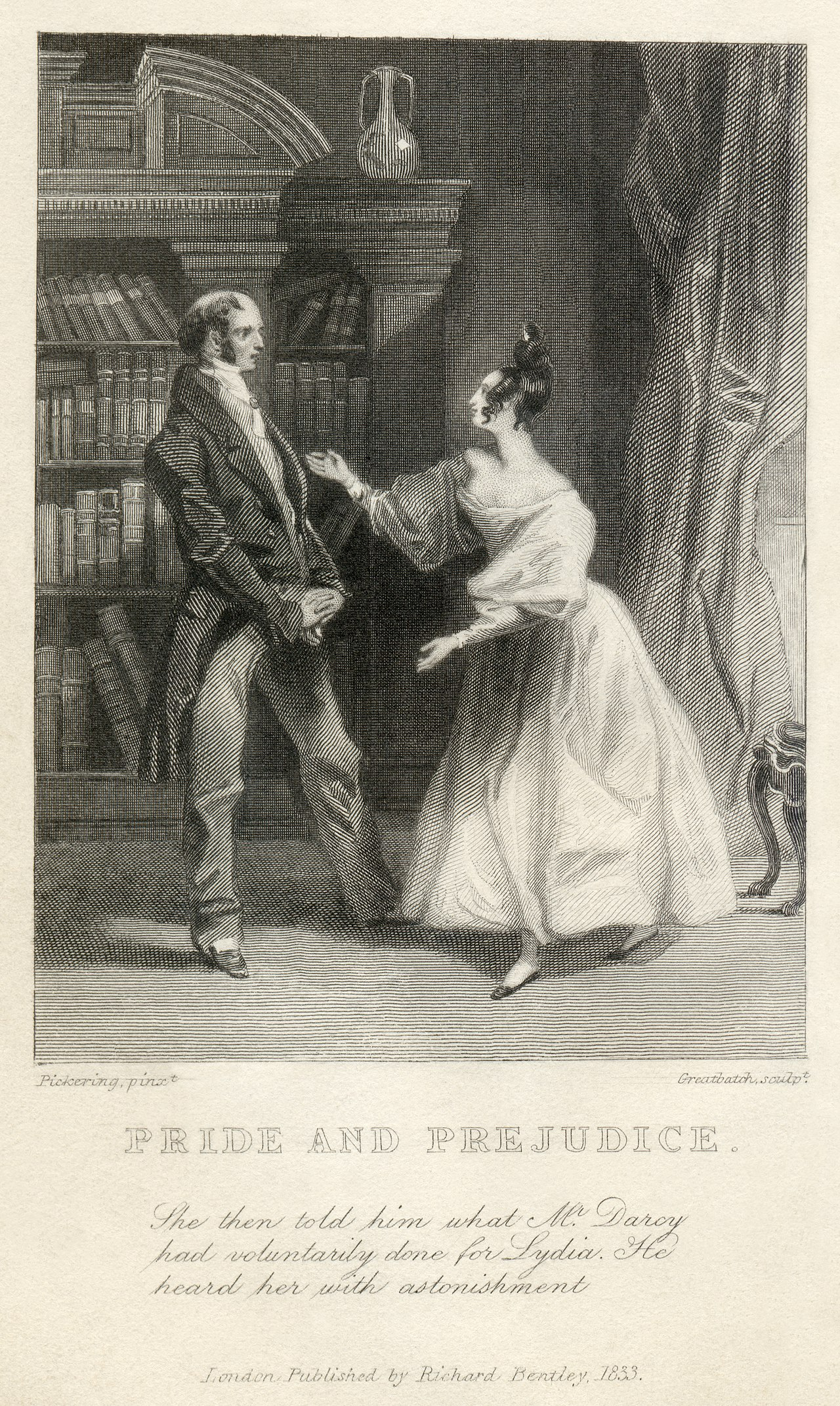
Book · 1813
Pride and Prejudice
Pride and Prejudice is an 1813 novel by Jane Austen centered on Elizabeth Bennet and Fitzwilliam Darcy. Their changing judgments unfold within a comedy of manners about family, marriage, money, and social rank.
Related ideas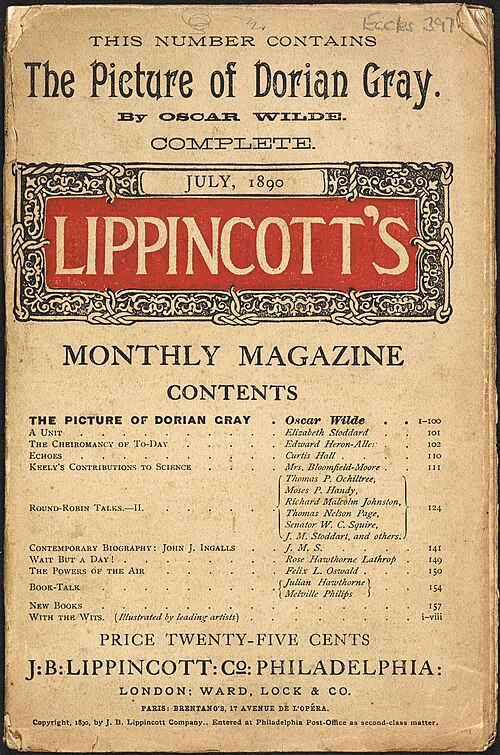
Book · 1890
The Picture of Dorian Gray
The Picture of Dorian Gray is a novel by Oscar Wilde about a young man whose portrait bears the visible consequences of his choices. The book combines Gothic elements with questions about beauty, influence, pleasure, secrecy, and moral responsibility.
Related ideas
Book
De Profundis
De Profundis is a long letter Oscar Wilde wrote to Lord Alfred Douglas while imprisoned in Reading Gaol in 1897. The work reflects on their relationship, Wilde's suffering, artistic identity, and spiritual change. Robert Ross first published an abridged version in 1905, with later editions restoring more of the text.
Related ideas
Book · 1868
Little Women
Little Women is a two-volume novel by Louisa May Alcott first published in 1868 and 1869. It follows the March sisters as they move from adolescence toward adult work, relationships, loss, and artistic ambition.
Related ideas
Book
The Soul of Man under Socialism
The Soul of Man under Socialism is an essay by Oscar Wilde first published in the Fortnightly Review in 1891. It argues that abolishing private property could enable individual development, while warning that authoritarian socialism would create a new form of tyranny.
Related ideas
Book · 1851
Moby-Dick
Moby-Dick is an 1851 novel by Herman Melville narrated primarily by the sailor Ishmael. Its voyage aboard the Pequod becomes Captain Ahab's obsessive pursuit of the white whale Moby Dick.
Related ideas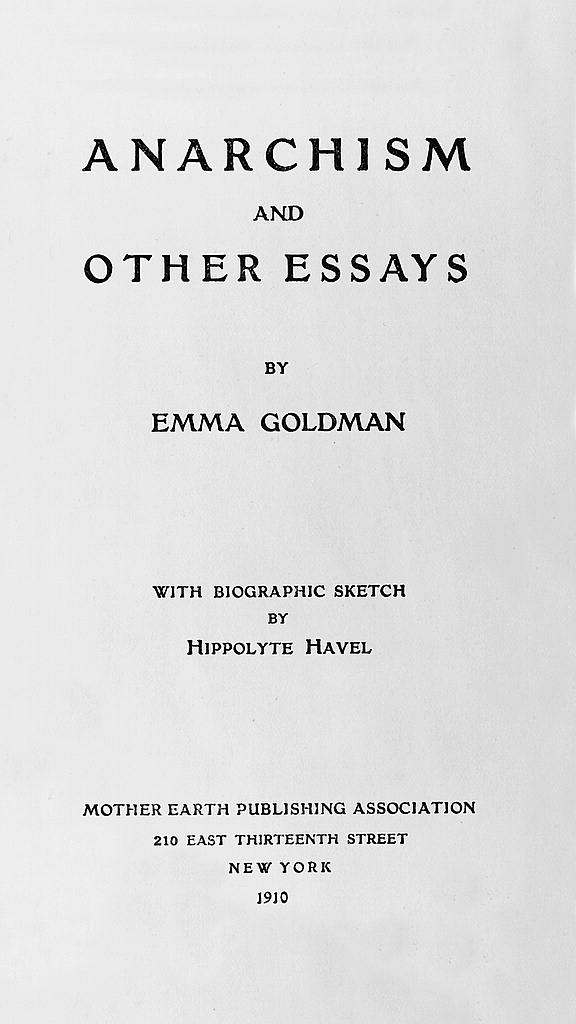
Book · 1910
Anarchism and Other Essays
Anarchism and Other Essays (1910) is a collection of essays written by Emma Goldman, first published by Mother Earth Publishing Association. The essays outline Goldman's anarchist views on a number of subjects, most notably the oppression of women and perceived shortcomings of first wave feminism, but also prisons, political violence, sexuality, religion, nationalism and art theory.
Related ideas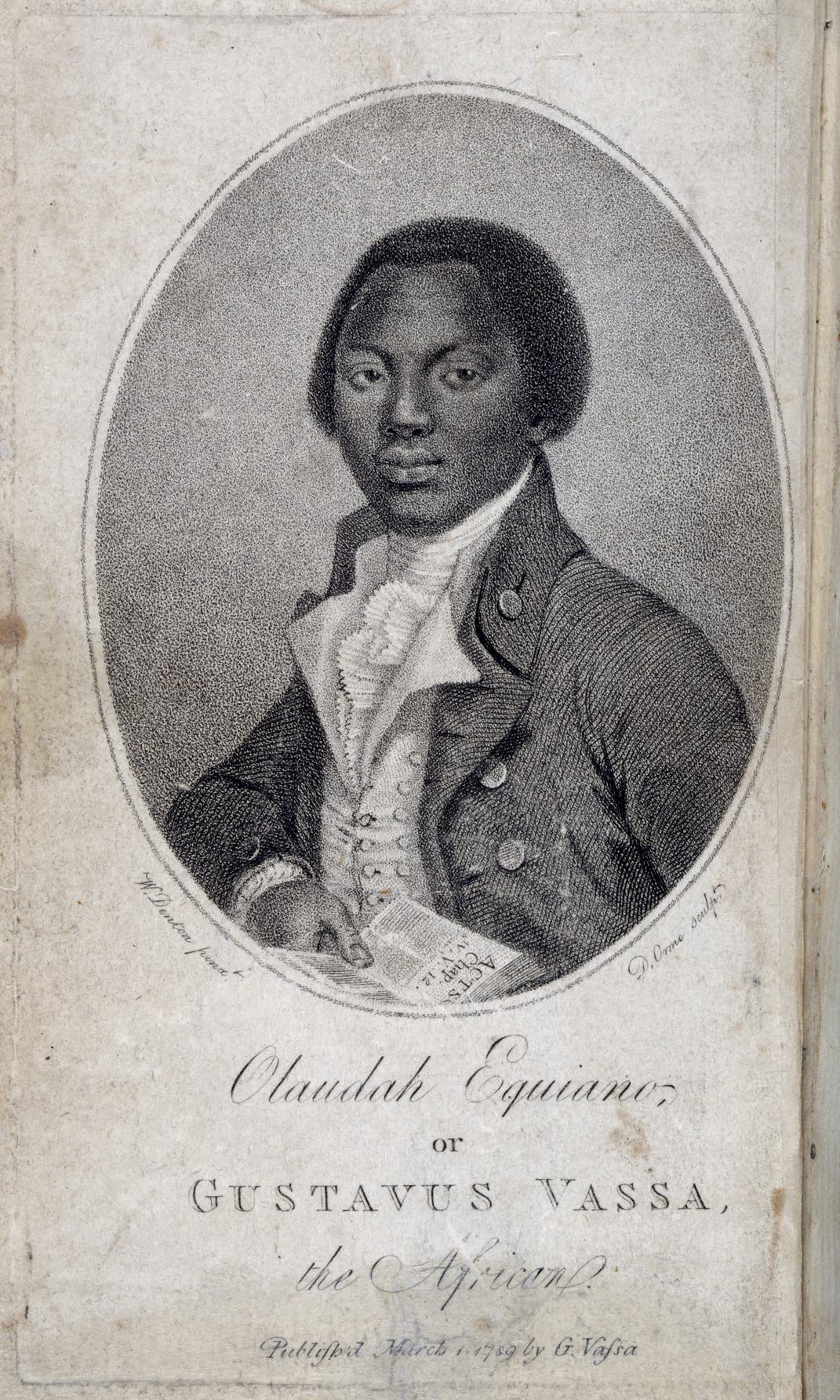
Book · 1789
The Interesting Narrative of the Life of Olaudah Equiano
The Interesting Narrative of the Life of Olaudah Equiano, Or Gustavus Vassa, The African, first published in 1789 in London, is the autobiography of Olaudah Equiano, an African from what is now Nigeria who was enslaved in childhood and eventually bought his freedom and became an abolitionist in the United Kingdom. The work draws on autobiography.
Related ideas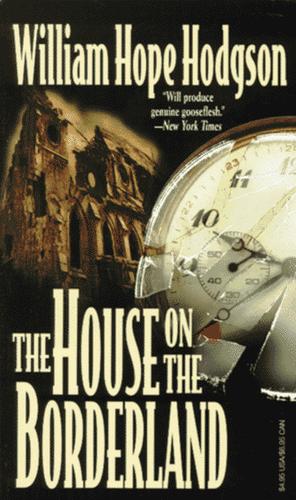
Book · 1908
The House on the Borderland
The House on the Borderland (1908) is a supernatural horror novel by British fantasist William Hope Hodgson. The novel is a hallucinatory account of a recluse's stay at a remote house, and his experiences of supernatural creatures and otherworldly dimensions.
Related ideas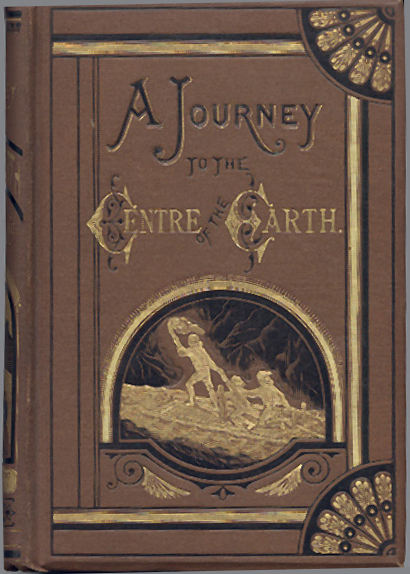
Book · 1864
A Journey to the Centre of the Earth
Journey to the Centre of the Earth, also translated with the variant titles A Journey to the Center of the Earth and A Journey into the Interior of the Earth, is a classic science fiction novel written by French novelist Jules Verne. It was first published in French in 1864, then reissued in 1867 in a revised and expanded edition.
Related ideas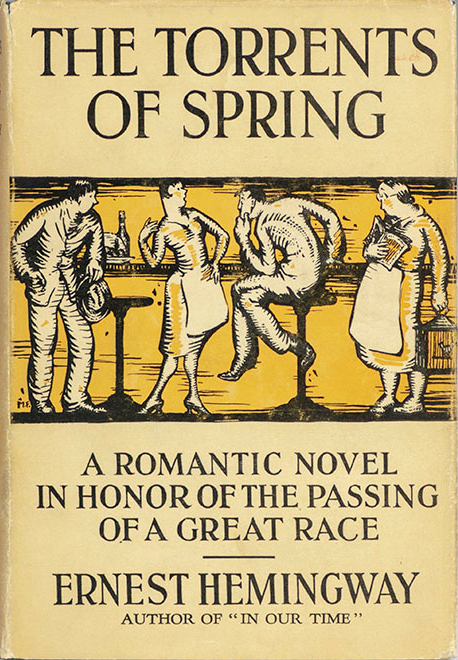
Book
The Torrents of Spring
The Torrents of Spring is a short story by Ivan Turgenev. Its themes and subject matter include First loves and Man-woman relationships. Together, these subjects provide the book with its main literary, historical, social, or intellectual context.
Related ideas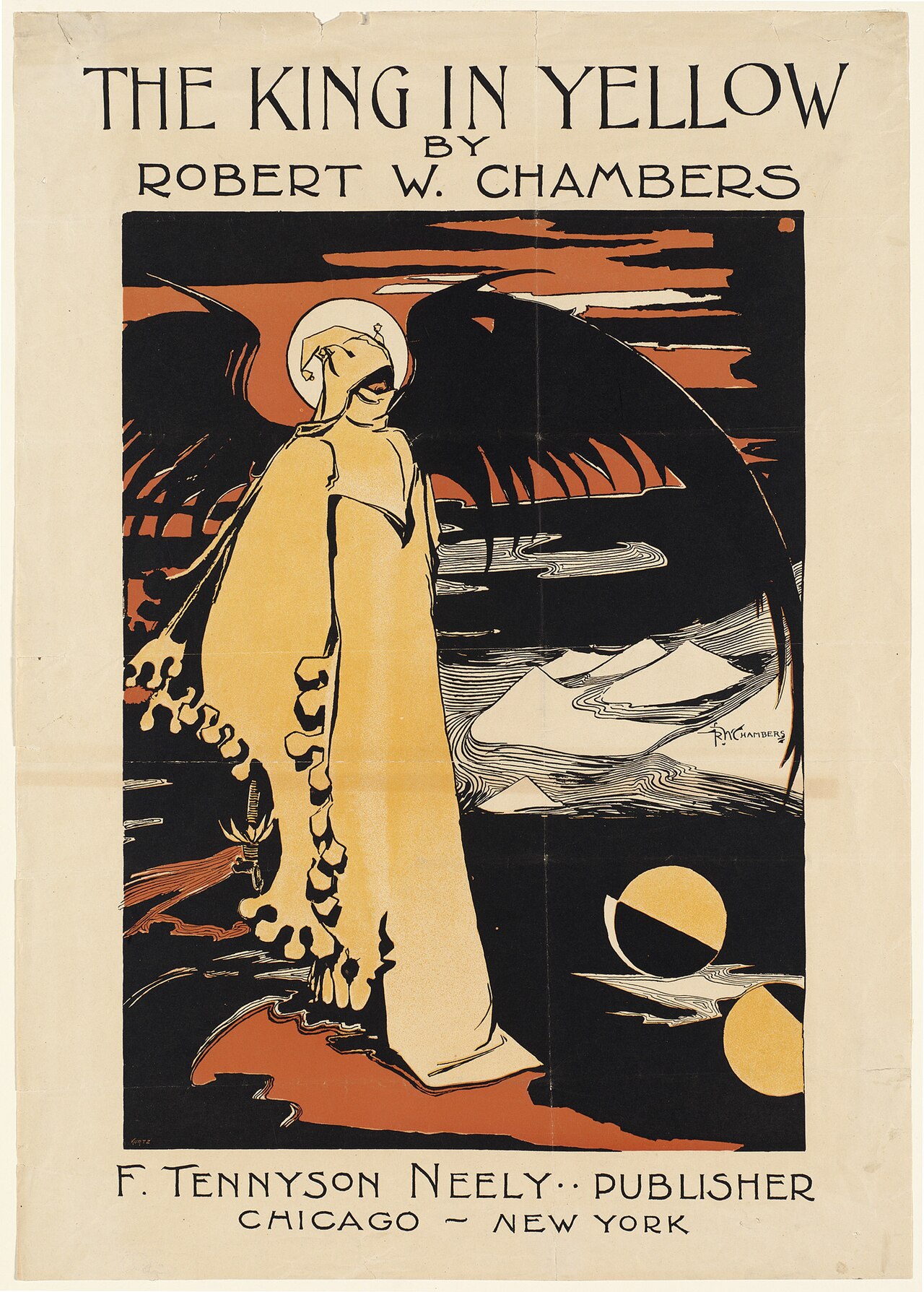
Book · 1895
The King in Yellow
The King in Yellow is a short story collection by American writer Robert W. Chambers, first published by F. Tennyson Neely in 1895. The British first edition was published by Chatto & Windus in 1895.
Related ideas